
WATER and Sanitation Minister Senzo Mchunu has given instructions for the fast-tracking of two bulk water projects in the Ugu District Municipality, this while a war room has been established to plan and implement immediate interim water solutions for residents of Ugu.
The municipality has come under fire from disgruntled residents owing to its inability to provide a reliable water supply. Local activist Ibrahim Shaik said for more than 107 days Ugu had not delivered consistent clean water to residents in ward 13, which include Hibberdene, Stickfarm, uMzumbe, Fairview, Alerton Store and down the coast to Port Edward.
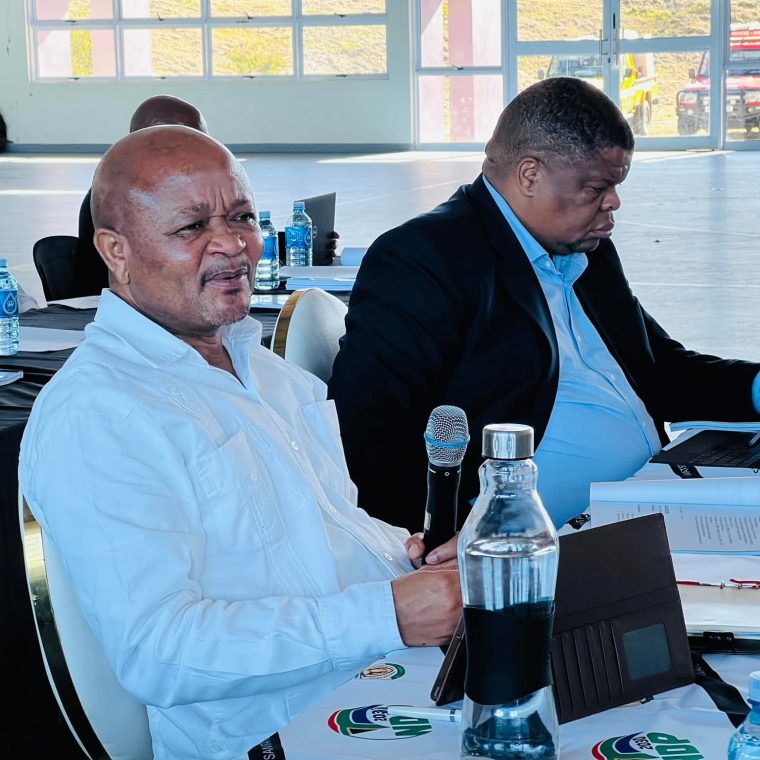
The Minister and Deputy Minister David Mahlobo held a meeting on Friday, 24 June with the KwaZulu-Natal Premier, Sihle Zikalala, the Executive Mayor of Ugu, Phumlile Mthiyane, MEC Hlomuka responsible for COGTA in KZN, officials of the provincial and national Department of Water and Sanitation, as well as the members of the Umgeni Water Board.
The government delegation also met with stakeholders who aired their grievances about the lack of water and shared some ideas to work together with government to resolve the water challenges in the area. The working session’s aim was to address and find solutions to the water challenges in the Ugu district municipality. In recent months, Ugu has been under the spotlight due to the municipality’s inability to provide reliable water.
Mchunu acknowledged government’s shortcomings in the management of water and water supply. “There is water, the dams are full, but people are complaining that they have no water coming out of their taps. We have not balanced our approach. We have been emphasising water services and not spending enough time on water management services,” said Mchunu
His comments were echoed by the department’s Deputy Director-General of Water Services Management, Risimati Matthye who said the water supply is there to cover the gap, however, the issue is how to quickly treat the water and deliver it.
“We have a deficit of 70 mega litres per day (ml/day). The demand is 200ml/day while the current supply is 130ml/day and the water availability is 224ml/day. The water is there, it is a matter of finding ways to quickly treat the water because the supply is raw,” Matthye said.
As part of the meeting resolutions, Mchunu said the province is currently working on two bulk projects: the Lower Umkhomazi Water Project and the building of a third dam for the District, which is part of the long-term solution. However, it’s estimated that both projects will be completed in 2025 at the earliest.
“It’s not a promise, it’s something that is already happening. If we could, we’d just call someone to come and do the work and get over it quickly, but it does not work like that. The Lower Umkhomazi water project will add 100ml/day and it’ll do more than close the gap, it will cater for further development. The only problem is that it will take time. The commission period is 2025 but we want to fast-track it.
“Ugu has two dams, and these are clearly not enough; so a third one is being built. The dam will add 41ml/day. The process has started,” assured Mchunu. The Minister assured stakeholders that fast-tracking the projects does not mean lowering the quality of the work or breaking any laws, particularly the Public Finance Management Act.
In the interim, a war room has been established and will be led by Umgeni Water’s manager for Corporate Services. The war room will put in place plans to ensure that while the two bulk water projects are being constructed the people of Ugu receive water. A weekly report will be compiled as the work progresses. The first report back on the progress of the projects will be given to the minister and deputy ministers on 8 July.
“We understand the importance of water and we understand our job clearly. Our jobs are not at the office and that’s what I am emphasising to the convenor of the war room. The job is out there,” he said.
Two representatives of the stakeholders have been roped in to be part of the war room and will be reporting back to the community, business, religious and traditional communities about the projects and progress.