
NEDBANK Pitch & Polish, one of South Africa’s most consistent engines of entrepreneurial growth, has opened entries for its 16th season alongside long-standing headline partner Nedbank.
Entrepreneurs are widely recognised as the engine of South Africa’s economy, with SMMEs contributing significantly to employment and local economic activity. Yet despite this, too many businesses remain informal, stuck in survival mode, or unable to scale beyond subsistence.
Funding is often cited as the primary obstacle, limited capital, constrained cash flow and a shortage of investors are commonly seen as the barriers holding entrepreneurs back. However, from a funder’s perspective, the issue is more nuanced.
South Africa’s economic context compounds these pressures. Entrepreneurs must navigate infrastructure bottlenecks, procurement complexity and compliance demands that expect a level of commercial maturity from day one.
KwaZulu-Natal’s economic recovery remains under pressure. High unemployment, crime, water infrastructure challenges, poor municipal service delivery and inefficiencies at the Port of Durban are making it harder for SMMEs to operate, increasing costs, disrupting operations and limiting growth. At the same time, SME sustainability is a growing concern. Data from the Durban Chamber of Commerce and Industry (DCCI) points to a decline in SMEs, with some businesses closing or relocating due to tough trading conditions, rising input costs, weak consumer spending and mounting compliance demands. Many entrepreneurs are operating in survival mode.
Yet funding isn’t the main issue. Gaps in financial management, planning, digital adoption and operations are what truly limit growth opportunities.
This is where programmes like Nedbank Pitch & Polish, supported by Raizcorp and uMngeni-uThukela – KZN’s largest supplier of bulk potable water and a key driver of economic infrastructure across the province – are stepping up to build stronger, investment-ready businesses through structured support and mentorship.
Nhlanhla Zama, Head of Empowerment at uMngeni-uThukela Water, emphasises the organisation’s commitment to small business growth as a civic responsibility and a lever for broader provincial development.
Many entrepreneurs believe that funding will enable them to build a better business. In reality, funders are far more likely to back businesses that have already demonstrated discipline, structure and the ability to execute.
From a funding perspective, consistent performance, a clear understanding of financials and the ability to deliver on plans are critical. Without these fundamentals, even strong ideas become difficult to support.
While capital remains a constraint, the deeper challenge lies in execution. Studies suggest that over 96% of small businesses fail within their first 10 years (Michael E. Gerber – The E-Myth Revisited), with limited management capability identified as a primary reason. Many founders are technically skilled but lack the leadership, financial understanding and strategic clarity required to scale a business.
This gap shows up in practical ways, including weak pricing models, poor cash flow management, limited forecasting and an underdeveloped sales pipeline. Without these fundamentals in place, growth stalls and access to funding remains out of reach.
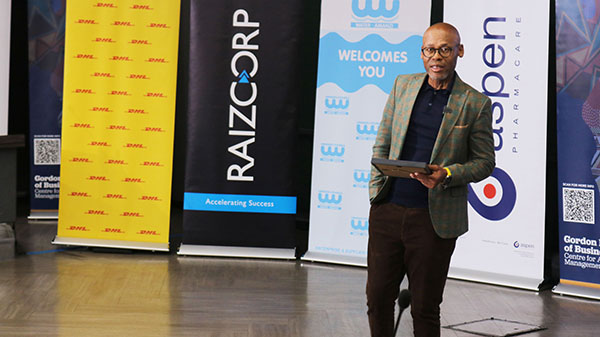
As Allon Raiz explains, this is where many otherwise promising businesses begin to falter. “Founders often struggle with leadership and management gaps, and this is what limits strategic execution. Even where funding opportunities exist, a lack of financial literacy, planning and operational systems can restrict access to capital.”
Market access further compounds the challenge. Many SMMEs remain confined to saturated local ecosystems, competing on thin margins. Breaking into larger supply chains requires governance, consistency and the ability to meet procurement standards that early-stage businesses are often not yet structured for.
Skills shortages, particularly in areas such as digital adoption and operational planning, add another layer of constraint. Without systems and reliable data, decision-making remains reactive, which limits resilience and long-term growth.
Over time, these factors create a structural trap. Many businesses rely heavily on personal savings and informal funding, while being unable to meet the collateral, compliance and trading-history requirements of formal lenders.
From funding to execution
Nedbank Pitch & Polish, backed by headline sponsor Raizcorp and Gold sponsor uMngeni-uThukela Water, is designed to help entrepreneurs develop better businesses.
“We know that many entrepreneurs have the drive and ideas to succeed, but often lack the structured support needed to translate that potential into sustainable growth. Strengthening how businesses operate, make decisions and respond to opportunity is critical to long-term success,” says Zama.
“As a Gold sponsor of Nedbank Pitch & Polish, we are committed to supporting initiatives that focus on building this capability. By investing in the development of more resilient and prepared entrepreneurs, we are helping to unlock businesses that can grow sustainably, create jobs and contribute meaningfully to local economic development.”
Contestants are taken through a rigorous, structured learning journey, designed around this approach. The focus is not on producing more polished presenters, but more capable founders.
Participants are supported across multiple rounds with targeted interventions that address the realities of running and scaling a business. This includes refining product-market fit, strengthening pricing and financial models, building sales processes and improving operational systems.
This learning is reinforced through one-on-one mentorship, where entrepreneurs are challenged to confront weaknesses, pressure-test assumptions and defend their commercial decisions in real time.
Contestants are assessed on how effectively they absorb feedback, adapt their thinking and strengthen their businesses under pressure. This reflects the reality of entrepreneurship itself: success is rarely about getting it right the first time, but about learning quickly and executing better each time.
Entrepreneurs still compete for a prize package worth R1 million, including R650 000 in cash and a R350 000 bursary for a two-year incubation programme.
The more significant value lies in the capability developed through the process, which improves access to funding, strengthens market readiness and supports long-term sustainability for every contestant, no matter where they place in the final ranking.
Building businesses that can scale
Sustainable businesses are built on strong leadership, financial discipline, operational systems and credible access to markets. If the goal is meaningful economic inclusion and job creation, then strengthening execution capacity, not just increasing access to funding, must sit at the centre of South Africa’s entrepreneurship agenda.