

IN the state-owned company’s annual results for the year ended 31 March 2025, Transnet showed a loss of R1,9 billion, a 74% improvement over the previous year’s R7,3 billion loss. Presenting the results on Friday, 5 September, the state-owned company said it experienced significant improvement in the operating environment, particularly in the rail business, owing to the implementation of its Recovery Plan. According to Transnet, this was driven by weighted average tariff increases as well as by volume increases in the automotive and rail businesses, but lower pipeline and container volumes partially offset the revenue increase.
Transnet said the increase in capital expenditure, from R16,9 billion to R24 billion, signifies its focus on expanding and modernising the country’s freight logistics infrastructure.
Operational outlook
Transnet said that, as it executes its ‘Reinvent for Growth’ strategy, the focus shifts from operational recovery to transformation and long-term, sustainable growth. “This is a shift in strategy and mindset, one that places our customers, partners and the country’s economy at the heart of everything we do,” Transnet sated.
The annual improved revenue performance, reliable cash generation from operations after working capital changes and improved rail volume performance, collectively provides an adequate platform for Transnet to continue its drive to sustainable profitability.
Transnet said it will continue to prioritise focused projects on improving rolling stock availability and the rail infrastructure condition while building on improved efficiencies and customer projects that have aided improved volume performance on key corridors.
The replenishment of key port equipment in the short- and medium-term as well as through the acquisition of critical spares to support the maintenance teams is a key focus area across all terminals and will go a long way to sustain efficient and improved performance at the ports, it said.
Transnet said it is deeply committed to improving the turnaround times, reducing congestion and enhancing the predictability of its services across rail, ports and pipelines. Investments in new equipment, digital systems and operational excellence are already yielding results.
“Private Sector Participations (PSPs) will remain a cornerstone of our strategy. These partnerships will ensure that Transnet becomes more agile, competitive and customer centric,” the SOC stated.
Transnet said it has made significant progress in implementing key reform initiatives aligned with the Freight Logistics Roadmap (FLR), which outlines the strategic direction for the sector’s transformation.
According to Transnet, some of the notable achievements include:
- Establishment of the Transnet Rail Infrastructure Manager (TRIM). The TRIM was created as an interim Operating Division. This marked a fundamental milestone in the reform process, formally separating infrastructure management from rail operations. This structural change enables the participation of private train operating companies (TOCs) in a fair and competitive market.
- Publication of the Final Network Statement. TRIM, working under expedited timelines, collaborated with the Independent Rail Economic Regulator Committee (IRERC) to publish the final network statement. This document is a critical enabler of a competitive multi-operator rail market, detailing access conditions, including fee structures, for the national freight rail network.
- Launch of the Slot Application Process. TRIM initiated a market-facing slot application process, inviting potential TOCs to apply for network access and operational slots in order to enhance the performance of the logistics sector in South Africa. The initiative received strong market interest, and the evaluation of applications was ongoing at the close of the financial year.
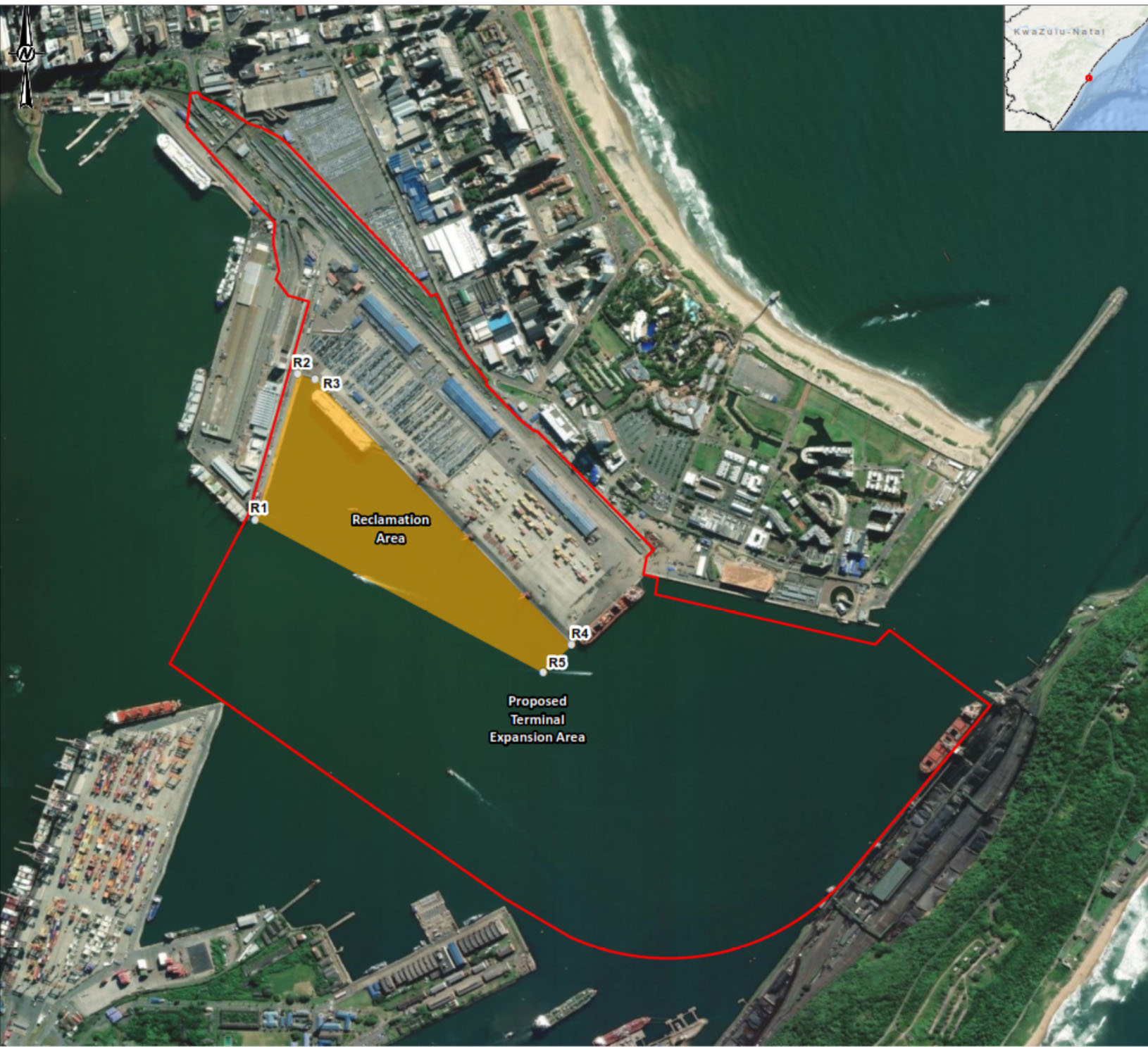
- Port Infrastructure and Equipment Enhancements. Within the port environment, several short-term FLR initiatives were implemented to improve operational efficiency. These included the delivery and commissioning of landside and maritime equipment to support Transnet Port Terminals (TPT) and Transnet National Ports Authority (TNPA). TNPA received several new tugboats, enhancing capacity at the strategic Port of Durban and renewing capabilities at support ports such as East London.
- Private Sector Participation in Container Terminal Development. In a landmark development, TNPA appointed the first private sector operator to develop and manage a fully-fledged container terminal in South Africa, located at the Port of Richards Bay. This initiative is expected to add 200,000 TEUs of annual container capacity, fostering growth and competition in the ports network. The preferred bidder is a joint venture between Grindrod and Eyamakhosi Resources called the Grindrod Eyamakhosi Joint Venture (JV).
Transnet said these initiatives are embedded within the state logistics company’s ‘Reinvent for Growth’ strategy, driving tactical recovery, transformative change and laying the foundation for expansionary growth. “In the 2025/26 financial year, our focus will be on measurable improvements in rail volumes, port throughput and financial sustainability, while embedding accountability and performance monitoring to ensure delivery. Improved financial performance, disciplined capital management, and the government guarantee facility together provide the stability and resources needed for Transnet to modernise infrastructure, attract private investment, and strengthen competitiveness, ensuring the turnaround is sustainable,” the state-owned company stated.
Salient features of financial performance, compared to the prior financial year, are as follows:
- Revenue increased by 7,8% to R82,7 billion
- Net operating expenses decreased by 4,9% to R52,1 billion
- EBITDA increased by 39,4% to R30,6 billion, with the EBITDA margin increasing to 37,0%.
- Capital investment increased by 44,2% to R24,0 billion for the year
- Loss for the year is R1,9 billion, a 74% improvement (2024: R7,3 billion)
- Cash generated from operations after working capital changes decreased by 0,6% to R28,6 billion
- Gearing of 49,6% and cash interest cover (including working capital changes) at 1,8 times