

THE announcement that 11 companies and consortiums have progressed to the next stage of negotiations to secure slots on Transnet’s rail lines is a breakthrough for rail reform. Unlike Transnet’s announcement of a private sector partner for the Port of Durban’s DCT Pier 2, this is not a ‘winner-takes-all’ bid, nor a make-or-break chance at being approved.
Transport Minister, Barbara Creecy, made it clear in the 22 August media conference, that the department’s objective is to capacitate private partners to supplement the only Train Operating Company (TOC), Transnet Freight Rail’s current freight volumes up from 160 Mtpa to the target of 250 Mtpa.
Transnet GCEO Michelle Phillips said the 14 unsuccessful applicants, as well as new applicants, would be encouraged to reapply and apply for rail slots.
Creecy confirmed that 41 slots had been awarded and that these include routes on all of Transnet Rail Infrastructure Manager’s (TRIM) six rail corridors. Details of the companies and consortia are slowly emerging, with the Business Times publishing a list on 31 August.
The long haul
Surprisingly, Africa’s largest private rail operator, based in South Africa, Traxtion – did not apply for slots. In a radio interview, Traxtion CEO, James Holley, told Moneyweb’s Ryk van Niekerk that the company has every intention of operating in South Africa at significant scale, but that it would like to see some improvements in order to invest.
Holley said it’s not a sprint to be the first and that Traxtion takes an extremely long view of the industry. “We aren’t fighting over a finite resource in terms of how many slots are available on the network,” he said, pointing out that the Durban-Johannesburg Container Corridor was designed for 1,008 slots per week.
Explaining why Traxtion was not among the first to apply for slots on TRIM, Holley said the company’s fleet of 60 locomotives is operating in nine countries across the continent on long-term contracts, making none available in the short-term.
He also said the company felt there were some improvements that could be made to the rail access agreement embedded within the Network Statement. South Africa’s rail infrastructure will continue to be owned, maintained and managed by TRIM, with the TOCs’ businesses relying on this infrastructure.
Holley said Traxtion would like to see service level commitments. To be economically viable, a slot allocation should come with a service level commitment, enabling the company to calculate how many trips it can do a day at a flat rate.
He also said he would like to see a more balanced approach in terms of the legal protections that are available, as well as recognition of lender rights. Hefty investment is needed in rolling stock and wooing investors demands a compelling case.
Grindrod
The logistics group, Grindrod, which already operates freight rail services, was the first to confirm its successful application for rail access. Also operating port terminals, rail slots will enable it to provide an end-to-end service to customers.
Grindrod confirmed that it has been awarded slots on the Northeast Corridor. This corridor connects Beit Bridge to Richards Bay via Komatipoort and Pyramid/ Rayton/ Emalahleni to Komatipoort. Commodities, including coal, chrome, and magnetite, are transported on this line, as well as fuel and containers.
Menar
The mining company, Menar, confirmed it has secured approval for tonnages for three products: thermal coal, manganese ore and manganese alloys. Vuslat Bayoglu, Menar’s managing director, said the company’s newly established ferromanganese business, Khwelamet, also received a boost in TRIM’s inaugural rail access allocations. The company’s approved access would allow it to transport manganese ore from the Northern Cape to Khwelamet’s industrial complex in Meyerton, Gauteng, for beneficiation.
An additional allocation has been made to move manganese alloys from the Meyerton site to Durban.
Bayoglu said this augurs well for Khwelamet’s plans as it prepares to refurbish and restart operations at the smelter complex previously owned by Samancor Manganese. The smelter complex has been under care and maintenance for a few years.
“We have always believed that an efficient logistics system is an enabler of economic development. We look forward to working with TRIM to make sure the ongoing reforms bear the desired outcomes,” Bayoglu said.
Business Times listed other successful applicants as Mediterranean Shipping Company (MSC), Minrail Solutions, African Railway Co, Motheo Africa Logistics, Interlinks, New Cape Rail, Barberry &Tsiko and Eracema.
According to Business Times, Minrail Solutions was established in 2022 to provide junior miners in the Northern Cape with a cost-effective solution for bringing their ore to market. Its technical partner is Global Railway Engineering (GRE), which has intellectual property and design rights for the HS Scheffel bogie, a self-steering railway wheel system developed in South Africa.
The TOCs will be ‘price takers’ as tariffs are set to be regulated by the Transport Economic Regulator (TER). The TER is intended to function in a manner similar to the National Energy Regulator of South Africa (Nersa), which approves tariff proposals from regulated entities like Eskom.
Developments
Before trains hit the tracks, TOCs will need to undergo further due diligence and negotiations with TRIM and be certified by the rail safety regulator. The first private TOCs are expected on Transnet tracks as soon as 2027.
In addition to allocating private TOCs access to state-owned rail lines, the Department of Transport has completed an RFI process and will issue RFPs for those who wish to invest in major revitalisation of Transnet’s rail lines. Creecy said that, although the RFPs had not been issued yet, this is likely to be awarded in the form of concessions. She said once a preferred bidder is appointed, it is estimated that it will take two years to reach financial close. A best case scenario will see investments starting three years from now. In the meantime, Transnet has requested funding from the National Treasury to improve the country’s dilapidated rail network.
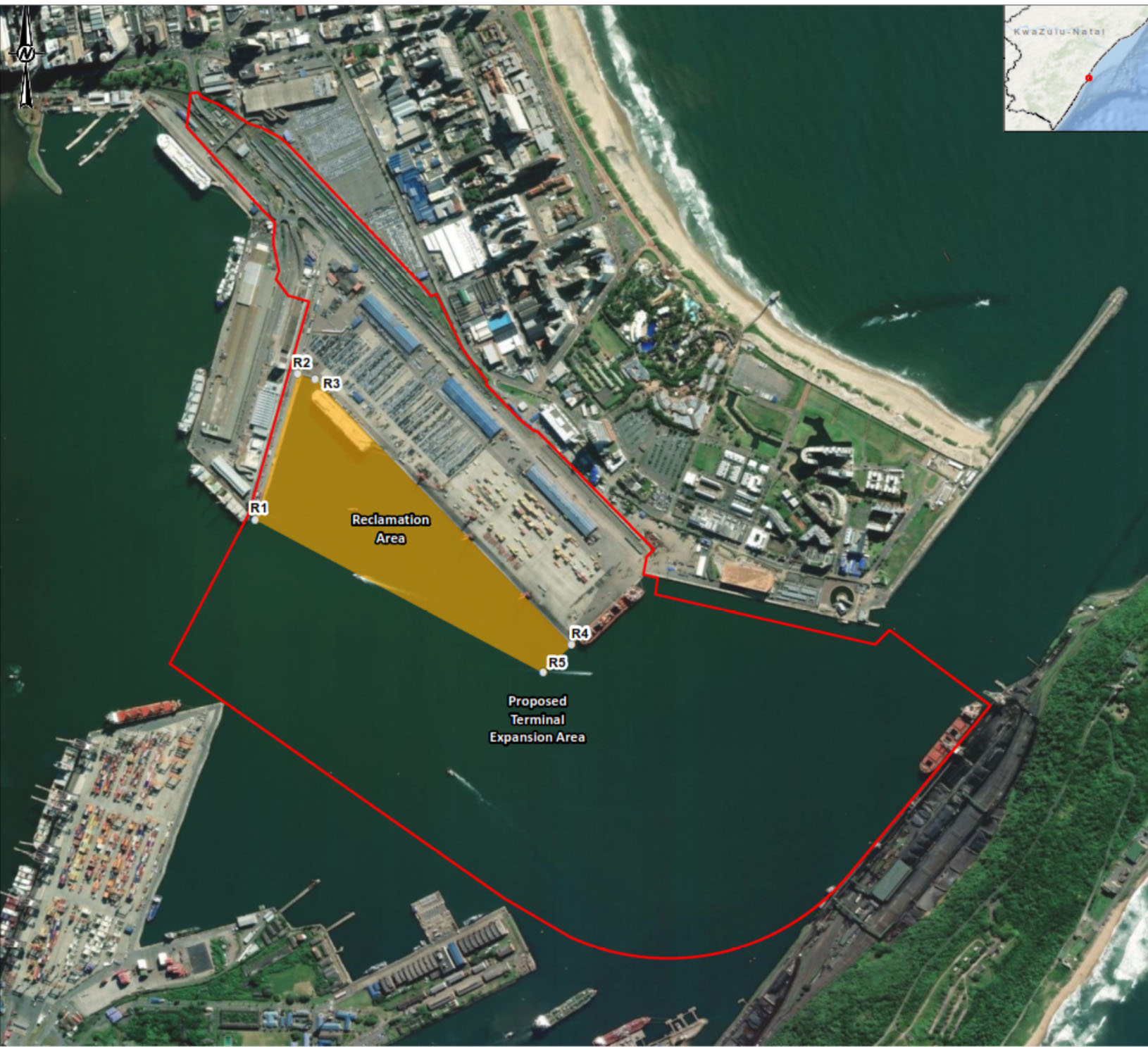
Phillips said Transnet had requested R16.4 billion in funding from the National Treasury. R10 billion would be allocated to work on the North and Ore Corridors. The remaining R6.4 billion would be spent on deepening the Durban port and the new berth at Ngqura. This request has not yet been granted and a further request for R18.6 billion is due to be submitted to National Treasury in October.