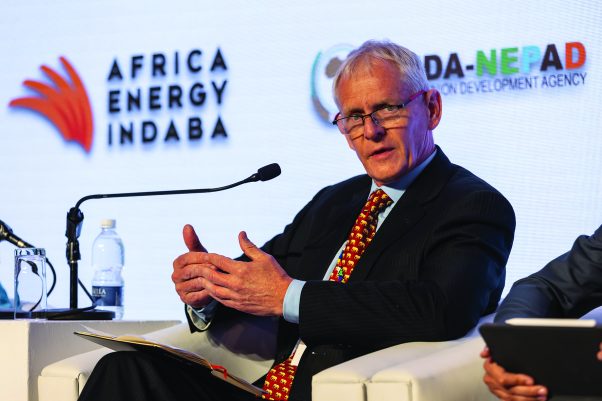

AS a leader in Africa’s energy sector, Hatch’s regional director for energy (Africa, India & Middle East), Peter Viljoen (pictured), contributed to the opening plenary panel at the Africa Energy Indaba held in Cape Town in March. The annual Indaba is a cornerstone for shaping Africa’s energy future, and Hatch sponsored the 2025 edition.
Viljoen participated alongside fellow distinguished industry leaders in a discussion titled “Balancing Africa’s Need for Development and a Just Energy Transition,” addressing the complexities of shifting to low-carbon energy systems while ensuring equitable access to electricity across the continent.
Addressing Africa’s energy realities
In his remarks, Viljoen emphasised the diverse and multifaceted nature of Africa’s energy landscape, presenting key data that underscores the challenge of balancing development with decarbonisation:
- South Africa, Egypt, and Algeria collectively consume 50% of all electricity generated on the continent, while Africa as a whole contributes just 4% to global greenhouse gas emissions.
- Approximately 600 million Africans – 40% of the population – still lack access to electricity, making the notion of a “transition” secondary to the more immediate need for first-time electrification.
- Africa is not a single market; the 54 nations each have distinct energy infrastructures, generation capacities, and resource endowments, necessitating tailored strategies rather than a one-size-fits-all approach.
“African nations must navigate the dual challenge of decarbonisation and electrification in a way that recognises their unique energy contexts,” said Viljoen. “While some countries, such as Ethiopia and Kenya, already rely primarily on renewable sources, others, like South Africa and Egypt, remain heavily dependent on fossil fuels. The transition must be practical, cost-effective, and, most importantly, sustainable for the people it serves.”
A sustainable energy future
Viljoen highlighted the inherent intermittency challenges of renewable energy sources and the need for strategic solutions to ensure energy security. The recent low flow levels of the Zambezi River, which have significantly impacted hydroelectric output in Zambia and Zimbabwe, serve as a stark reminder that resilience and reliability must be built into any transition strategy.
Key considerations for Africa’s decarbonisation pathway include:
- Grid expansion and energy storage: Rapid adoption of renewable energy must be supported by robust grid planning, battery energy storage systems (BESS), and pumped hydro storage.
- Diversified generation mix: As countries like South Africa wean themselves off coal, new renewable investments will need to be supported by the likes of clean hydro imports and, possibly, nuclear energy as sources of baseload power, and BESS and natural gas as peaking power solutions.
- Microgrids for rural electrification: In nations with low electrification rates, decentralised renewable energy solutions, such as microgrids, provide an opportunity to leapfrog traditional infrastructure models – akin to how mobile phones bypassed landline networks across Africa.
- Cost-effective solutions: Economic realities dictate that energy transitions must be affordable, ensuring that cost-reflective tariffs do not exclude vulnerable populations from access to power.
A catalyst for economic growth
Hatch recognises that access to reliable, sustainable energy is a fundamental driver of economic development.
“Energy and economic growth are inextricably linked,” Viljoen noted. “Without a stable and secure energy supply, industries cannot function, businesses cannot grow, and people cannot thrive. If we provide Africa with a sustainable and consistent source of energy, we will attract investment, drive employment, and reduce poverty – creating a virtuous cycle of prosperity.”
As Africa looks toward the future, Hatch continues to partner with clients to develop innovative solutions that address the continent’s growing energy demands. By combining expertise and collaboration, the company continues to play a pivotal role in advancing the energy transition, ensuring that the path forward balances climate action, economic growth, and social equity. Through these partnerships, Hatch helps drive sustainable outcomes.