
THROUGH recent actions initiated by the ports’ landlord, Transnet National Ports Authority (TNPA), land use is being shifted, new terminal operators will be appointed and funding is being sought for ambitious projects for the ports of Durban and Richards Bay.
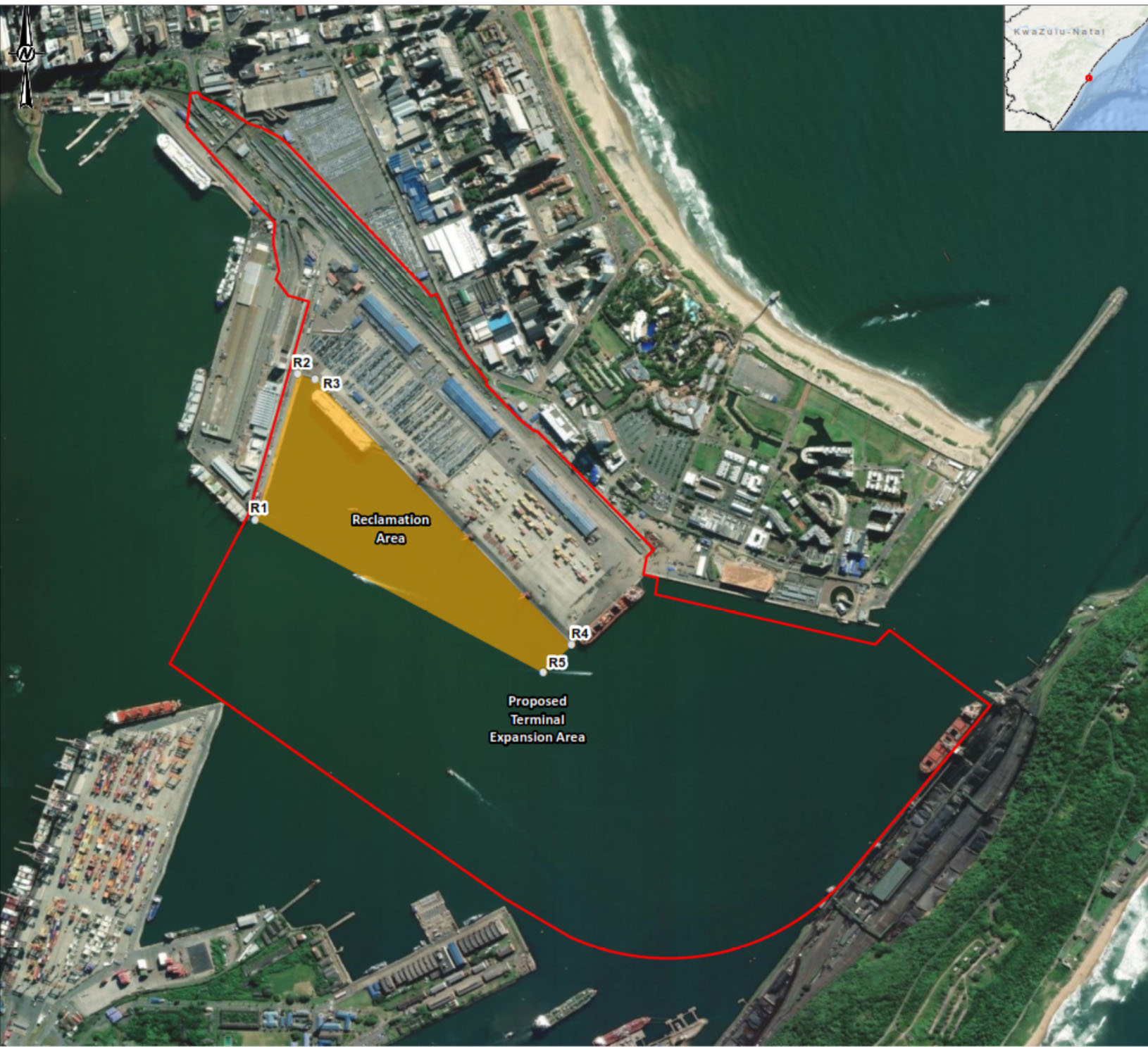
The KwaZulu-Natal Logistics Hub (KZN-LH) programme constitutes more than 30 mega-projects that are at various stages of execution. At the core of the programme are two port master plans which outline the expansion ambitions of the Durban Port’s container and automotive capacity and Richards Bay’s dry bulk capacity.
Richards Bay is also developing a Liquified Natural Gas (LNG) terminal and other liquid bulk terminals within the South Dunes precinct.
To free up space to expand the Port of Durban’s container capacity, the SA Navy will be relocating to Richards Bay. TNPA says that the relocation of the South African Navy base from the Port of Durban’s Salisbury Island to the Port of Richards Bay is moving “full steam ahead” and that within the coming weeks, TNPA and the SA Navy will enter into a memorandum of agreement which will be the last step before the project implementation starts. TNPA reports that the investment cost of relocating the SA Navy will be over R9 billion.
“The South African National Defence Force (SANDF), SA Navy and TNPA are working around the clock to ensure that the move is seamless and enhances the operating capabilities of the SA Navy while enabling the much-anticipated expansion plans for the ports of Durban and Richards Bay,” said TNPA.
“We are quite pleased with the level of collaboration that we are observing from both TNPA and the SA Navy, who jointly chair the steering committee and other operational committees, in ensuring the achievement of project objectives within the stipulated timeframes,” said portfolio director for the KZN-LH programme, Dr Bridgette Gasa-Toboti.
The SA Navy will retain a satellite base on Salisbury Island while the main base relocates to Naval and Pelican Islands at Richards Bay.
Bay of Durban
The ports’ master plans embrace Transnet’s new approach to strategic thinking where the segment strategies represent a fundamental change for Transnet ─ away from a divisional, modal service offering to strategic participation and structured collaboration in integrated commodity supply chains.
As part of the Port of Durban’s master plan, last week the eThekwini Municipality, Transnet, and the Provincial Economic Development, Tourism and Environmental Affairs (EDTEA) department announced that they are partnering to transform the Durban Bay Waterfront and Marina into an economic and tourism asset.
In a joint media statement, they said: “An overhaul of the Port of Durban and Marina is expected over the next few months. Still, in its inception phase, the development is expected to include four and five-star hotels, a museum, an exhibition centre, science centre, a mall, apartments, and an African cultural centre.
“The objectives of the marina development are to promote world-class tourism, develop Durban and the Port of Durban as a water sport and recreation playground, provide viable and sustainable commercial development opportunities with maximum public access, and provide positive linkages and interactions between the yacht basin and the inner city.”
Presenting an overview of the Port of Durban master plan at the Transport Forum hosted in Durban last week, KZN-LH programme director: Port of Durban, Johnny Mokheseng said that funding had not yet been secured for the project and its rollout would also depend on demand.
This project would transform the Margaret Mncadi Avenue, also known as the Victoria Embankment, precinct and the port’s connection to the city. Sub-surface terrain routing rail and road freight underground is also part of the plan.
Mokheseng said that executing projects in the master plan depended on three things: funding, private sector participation and legal compliance.
LNG and LPG terminals
In support of the Integrated Resource Plan (IRP) 2019, which relates to South Africa’s transition to a low-carbon energy mix, TNPA is fast-tracking gas import facilities.
At the Port of Richards Bay, TNPA reports that it will appoint an LNG terminal operator at the port in the financial year 2023/4. The introduction of an LNG facility is in support of the target to deliver up to 3 000 MW of power from gas.
On February 17, Transnet Pipelines announced that it intends to partner with Vopak Terminal Durban as its preferred partner to jointly bid for TNPA’s RFP to appoint a terminal operator for the LNG terminal in the Port of Richards Bay.
“This marks an important milestone in Transnet Pipelines’ long-term growth plans and its energy transition drive from oil to gas. The two parties are currently concluding the Joint Development Agreement and look forward to a successful partnership,” Transnet Pipelines said.
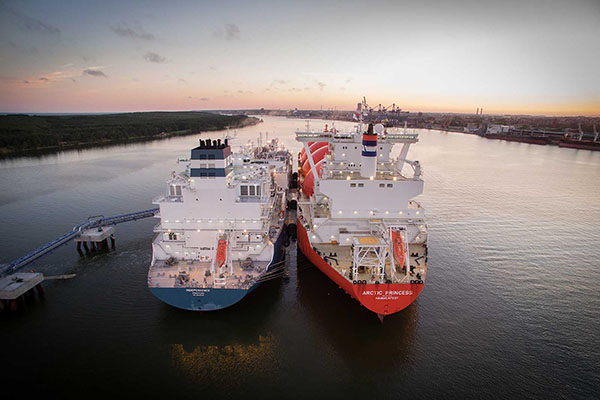
The terminal will include a floating storage and regasification unit (FSRU) which will be stationed along the waterside. The appointed contractor will operate the FSRU for a minimum period of 25 years.
The LNG is received in liquid form from a carrier vessel and pumped into the FSRU which is stationed at the dock. Once the LNG has been transferred into the FSRU, it is converted into a gaseous state and transferred via pipelines to end-users within and outside the port.
Meanwhile, in the Port of Durban, in mid-December, TNPA issued an RFP for a terminal operator specialising in Liquified Petroleum Gas (LPG) for a 25-year concession at the Port of Durban.
The successful bidder will be awarded the exclusive right to complete the financing, refurbishment, procurement of terminal equipment, operation, maintenance, and transfer of the facility to TNPA after the concession period.
“The process demonstrates our commitment to the push towards the reduction of emissions and decarbonisation that has triggered the move towards environmentally-friendly and sustainable sources of energy,” said port manager at the Port of Durban, Mpumi Dweba-Kwetana.
The deadline for submissions is the end of April.
Private sector participation
At the Transport Forum, Transnet said that its commitment to Private Sector Participations (PSP) had not changed. Transnet’s PSP strategy sees it working with all stakeholders to ensure the success of its PSP rollout and it seeks partnerships to grow market share.
Transnet pursues PSP models where:
- The required investments are either unaffordable to Transnet alone or are complementary to Transnet’s strategy.
- Transnet aims to unlock efficiencies through leveraging the private sector expertise; and
- Business opportunities within ports, rail and pipelines are non-core to Transnet’s operations.
- Transnet consists of the following operating divisions: freight rail, rail engineering, national ports authority, port terminals and pipelines.