
IN response to NERSA’s approval of Eskom’s tariff increase application, the ‘national voice’ of South Africa’s 257 municipalities, the South African Local Government Association (SALGA) has issued a statement declaring the current electricity model ‘fundamentally flawed’ and calls on the Department of Minerals and Energy (DMRE) to accelerate renewables projects.
In the current business model, the media statement explains, municipalities purchase bulk electricity from Eskom and then sell it to customers at a value that includes a markup. The fundamental question is now: if Eskom cannot provide electricity to keep the lights on, what power are municipalities going to sell to consumers? And where will the municipal revenues come from? It is hard to see anything positive in all of this, according to SALGA.
Certainly, the tariff increase will result in reduced use of electricity and make the business case for alternative solutions to grid power more and more compelling. This will further reduce municipal revenue at a time when municipalities are facing increased operational and salary costs.
SALGA says the business case for cost control, decarbonisation, savings in electricity, security of supply also applies to municipalities where municipalities are taking on board the energy transition and are already addressing energy efficiency, demand side management and alternative delivery models.
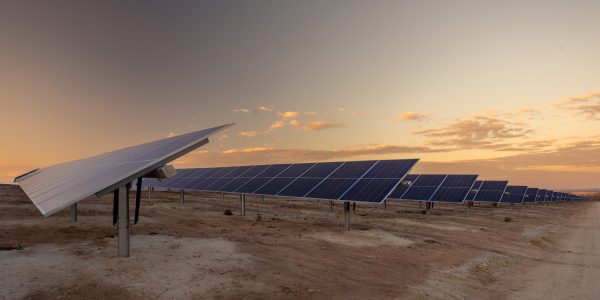
Because the current electricity model is fundamentally flawed, SALGA, on behalf of its members is advocating to accelerate the energy transition including legislative reforms that would enable municipalities to generate their own electricity and purchase electricity from independent power producers (IPPs) to relieve pressure on Eskom and ensure energy security.
In the media statement, SALGA calls on the Department of Minerals and Energy to facilitate decreasing the cost structure by making it easier for Eskom and municipalities to procure renewables and bring down the total costs of electricity in the medium to longer term. “We can’t afford these delays while we are sliding further into economic decline and electricity shortages.”
On the state of Eskom, SALGA says it believes that there is a lot of room for Eskom to be more efficient. “For example, coal contracts are not transparent, especially when buying coal from many coal suppliers. The skills within Eskom and the number of employees needs to be looked at, including ongoing corruption that is crippling the power utility. We would like to see transparent coal contracts and more information about Eskom’s capacity.”
SALGA made submissions to the National Energy Regulator of South Africa (NERSA) last year that Eskom’s tariff rise for the fifth Multi-Year Price Determination (MYPD5) should be capped at the inflation target set by the South African Reserve Bank (SARB). “We remain committed to this stance and implore NERSA to rethink its decision. NERSA’s decision to grant Eskom’s electricity tariff application has effectively compensated the power utility for underperformance, which only widens the trust deficit gap between Eskom, municipalities, and their communities.”
The energy transition means a transition away from our current thinking into the thinking of the new world of electricity – which is far more complex than simply putting up prices, the statement concludes.