
GENETICALLY engineered bugs and plants with an appetite for toxic waste are part of today’s weaponry for ridding the planet of pollution in a process called bioremediation.
Bioremediation takes advantage of the ability of living things such as microorganisms and plants to remove contaminants from the soil or other environments. Genes are engineered into plants or microbes to make them highly-efficient at removing pollution, speeding up a natural process that would normally take years.
This year’s Mining Indaba cast renewed focus on sustainability in the mining sector, which generates enormous volumes of solid and liquid waste.
Decarbonisation and circular economy goals took centre stage, with major players who have committed to or already have implemented a company-wide zero waste to landfill regime.
But how realistic is this objective?
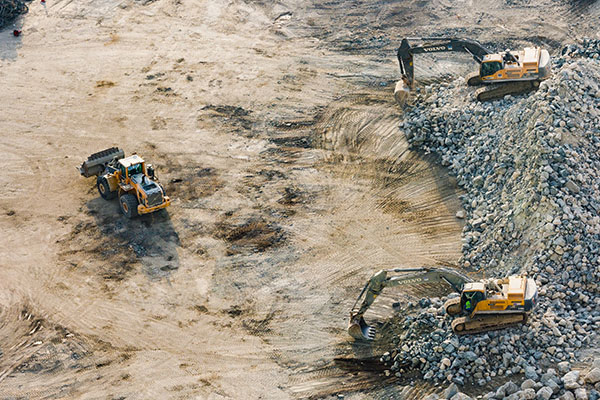
“Mining waste streams or tailings are diverse. The most common though is hydrocarbon-contaminated soils and stones. These contaminates are prevalent across the various mineral sub-sectors of the mining industry, leaving many mines without a solution,” said Jason Keen of the waste management and recycling company Averda SA.
After considerable research, Averda SA has found that bioremediation is a promising solution that mines can use to achieve their zero waste to landfill objectives.
Chemical remediation uses chemicals to render hazardous wastes inert, whereas bioremediation accomplishes the same goal using living organisms that are genetically engineered to carry out specific tasks at the molecular level.
This means that microbial bioremediation, phytoremediation and mycoremediation can, over time, convert mine tailings into perfectly inert material suitable for safe disposal. Alternatively, the converted inert earth can be left to lie. In many cases, the bioremediation process has restored masses of solid waste.
“One large platinum mine in Rustenburg, for example, transports and disposes of around
1 300 tonnes of hydrocarbon-contaminated material per month with various detrimental environmental consequences. Implementing modular in-situ bioremediation solutions offers these mines an opportunity to save money and help the planet,” said Keen.
One success story is Hillside Smelter in Richards Bay that has successfully used organisms to convert 100 000 tonnes of fluoride-contaminated soil into its constituent elements, without any need for disposal, which would have cost around R50-million.
Averda SA plans to use these organisms at Sibanye-Stillwater’s Rustenburg mine to activate on-site remediation of 5 000 tonnes of calcium sulphite-contaminated hazardous waste streams the mine produces monthly. This will save the mine R5-million in monthly transport costs.
Research is also currently underway to develop remediation technologies that will micro-encapsulate asbestos, a major hazardous waste concern because of its toxicity and friability.
Bioremediation offers mining and other industries immediate zero-waste-to-landfill solutions for a historical legacy issue that would otherwise cost millions to solve.
“Unlike other solutions that require costly transport, bioremediation is an elegant and entirely sustainable approach that lowers carbon emissions, reduces the use of chemicals, and saves significantly on overall costs.
“In many cases, liquid and soil-based waste-streams can be converted into a useful commodity such as water for industry or backfill,” says Keen.